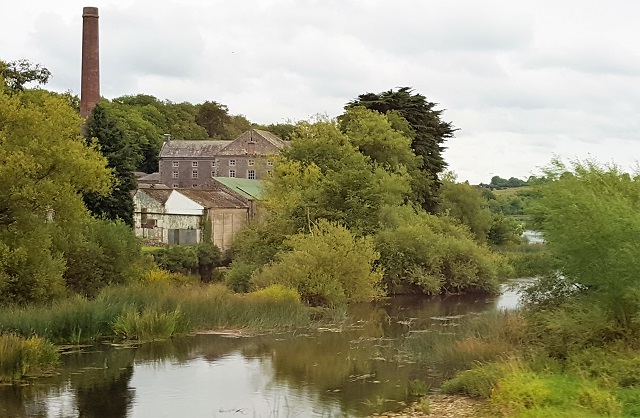
Mill on the River Boyne
We had to set an alarm this morning for today’s activities, and good thing we did because we were both up during the night for long sleepless stretches and only fell asleep an hour or two before the alarm went off. Lisa and Julie were also sleep-deprived to start the day, so we were quite the lively crew. (Tami was so sleepy by evening that these two sentences were “all she wrote”.)
Yesterday evening we were able to book a last minute tour for today to the Newgrange passage tomb at Bru Na Bóinne, a UNESCO World Heritage Site. This Neolithic site was built about 5000 years ago, 500 years before the pyramids of Egypt. The very large burial mound features a narrow passageway lined with massive stone slabs, some of which were inscribed with spirals and geometric art. The passageway leads to a small chamber within, which is also decorated with fine inscriptions. The tomb is engineered so that the sun sends a beam of light onto the back wall of the chamber at the height of the winter solstice. We were allowed to enter into the tomb in small groups and observe a representation of this effect using an electric lamp. It was so impressive to be within this chamber that was constructed 5000 years ago and see the engineering sophistication of the structure. We were not allowed to take pictures within the tomb, but the mound is surrounded by large stone berms, a few of which are also decorated. We were all in awe after our visit within the tomb. It’s just a shame we could not take any pictures to share.
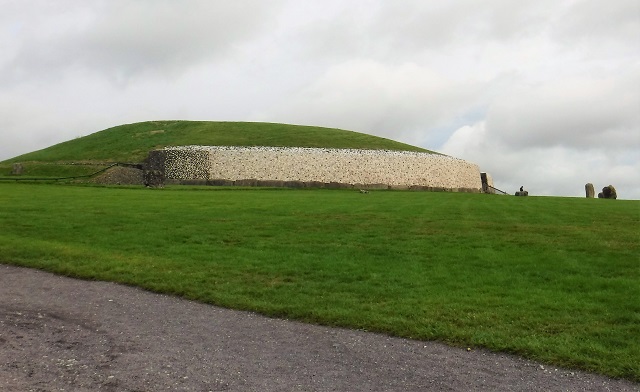
Bru Na Boinne
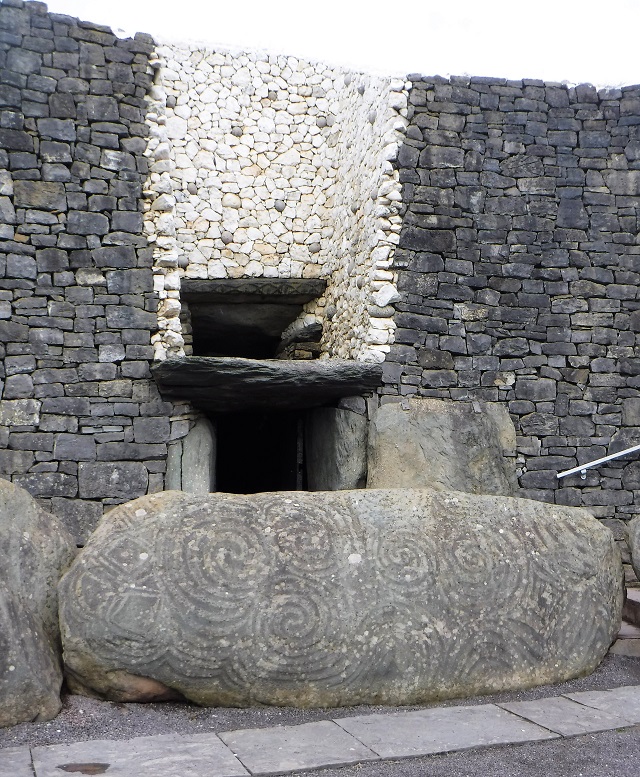
Entrance to the mound
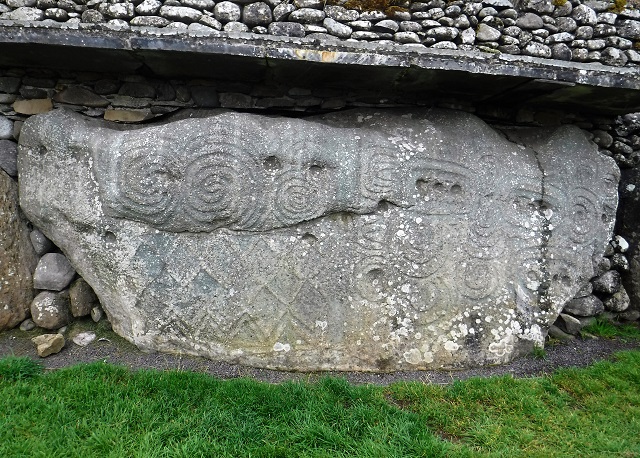
Carved stone
Bru Na Boinne is just above the sight of the Battle of Boyne (English spelling), one of the most significant battles in Irish history. it was here that in 1690 deposed Catholic King James II fought to regain the English crown from protestant King William III (William of Orange). James lost. As one guide put it, an Englishman and a Dutchman came to Ireland to fight over England.
Interestingly, on our last trip to Scotland we visited probably the most significant battlefield in Scotland, Culloden. In 1746 the grandsonson of James II, Bonnie Prince Charlie led the Scottish Jacobites against the English again over the British throne. Charlie lost. It was interesting that these two places we had visited on different trips were linked this way.
We also visited the Hill of Tara, another archaeological site with several ancient monuments. The territorial views from the hill are extensive and we were fortunate that the spitting showers of the morning had passed and we were treated to wonderful views. This site has had great ceremonial significance over the ages and is reputed to also be where St. Patrick got his start, probably choosing it because of its significance.
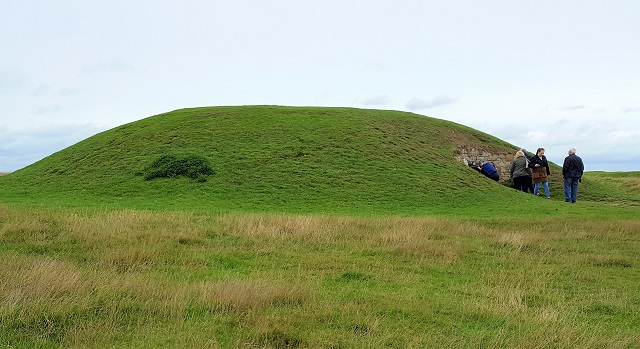
Another mound, on the Hill of Tara
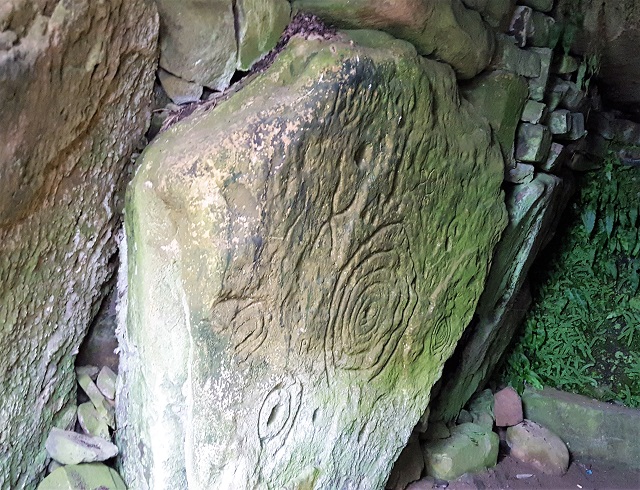
Carved stone inside the entrance to the mound
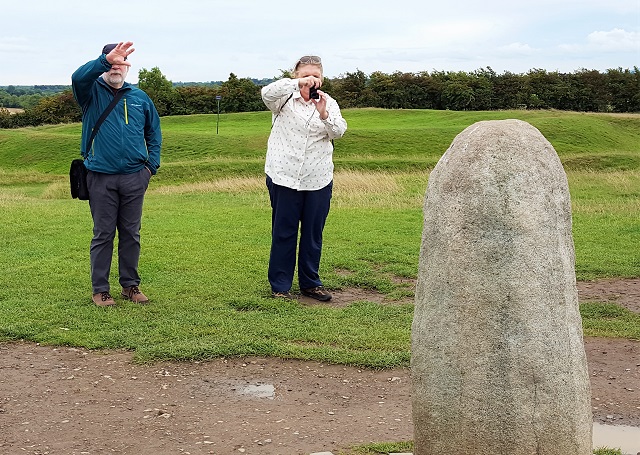
Mike and Julie checking out a, um… monument. Tami says Mike is casting a spell.
Our tour leader had an amazing knowledge of all the history of the sites and area, from Neolithic to modern. She also had a keen wit and dry delivery that kept us smiling. It was a great way to spend a day away from the busy city.
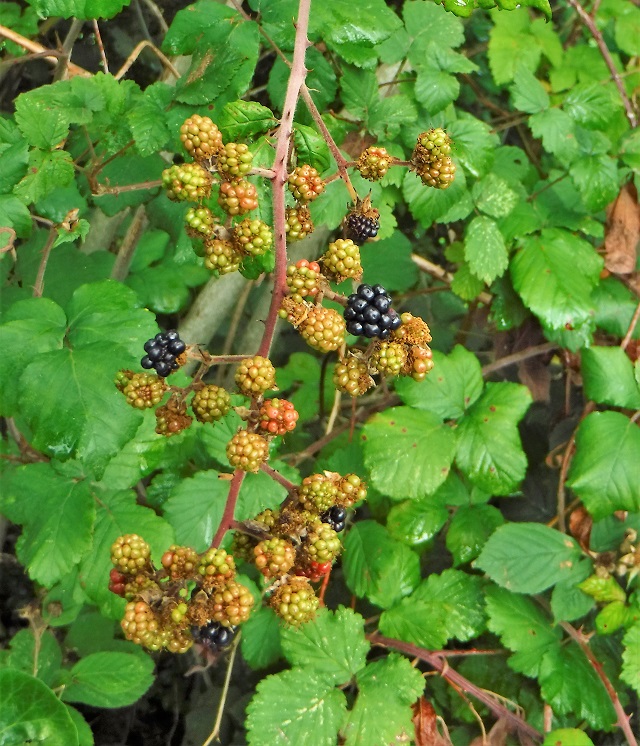
Irish blackberries!
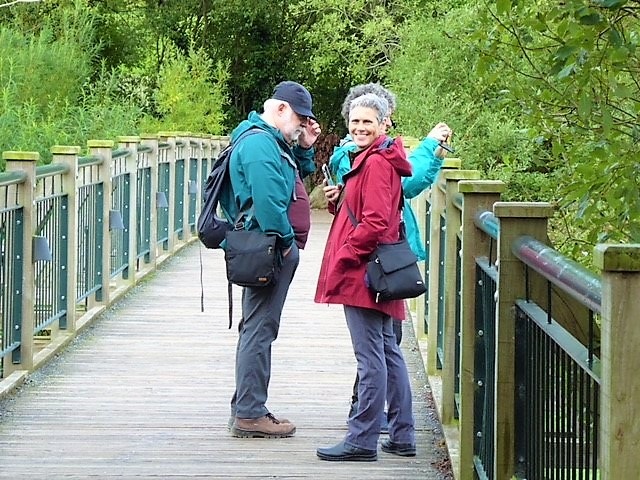
Lisa, Mike and Tami
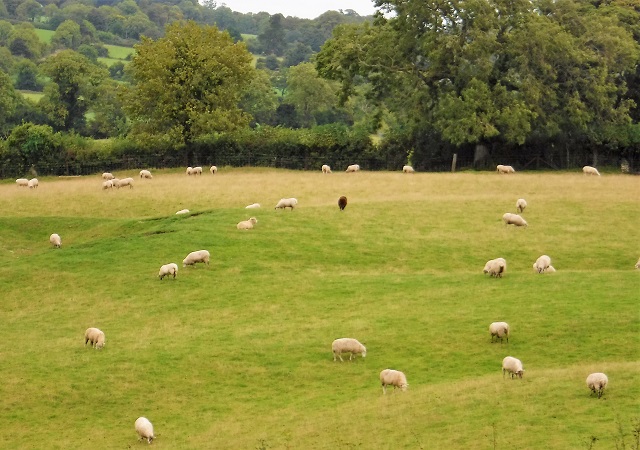
And who is the black sheep in this group?